
Figuring out exactly when you are most fertile can feel like a guessing game. It doesn’t have to be complicated though.
Every month your body goes through a cycle. Your ovary releases one egg. This process is called ovulation. Once that egg is out, it has a short window. It hangs around in your fallopian tube for just a few hours. If sperm isn’t there to meet it, that chance is gone.
That is why couples trying to conceive often turn to ovulation tests. They aren’t a crystal ball. But they do help narrow the window significantly. If you use them correctly, these tests are more than 90 percent effective at signaling when you are about to release an egg.
Here is the catch though.
These tests are for getting pregnant. They do not prevent it. Just because a test shows a negative result doesn’t mean you are safe from pregnancy. Skip contraceptives at your own risk.
The Science Behind the Surge
Ovulation usually happens in the middle of your cycle. For an average 28-day cycle, that is around day 14.
Your brain is pulling the strings here. It releases hormones to tell your ovaries to get to work. One specific chemical does the heavy lifting. It is called luteinizing hormone or LH.
When your body gets the signal to release an egg, LH levels spike. This is known as an “LH surge.” It happens one to two days before the egg is actually released. Ovulation tests are designed to catch this spike. They measure LH in your urine.
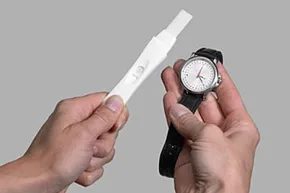
Most tests look like basic pregnancy sticks. You pee on them or dip them in a cup. Results appear within five minutes.
Some doctors use blood tests to check for ovulation. They are accurate. But they aren’t convenient. You have to go to a clinic. You need a professional. For home use, urine tests are the standard. They are accessible. They are private. And they work.
When Should You Start Testing?
Timing matters.
If you test too early, you might miss the surge. If you test too late, you might miss the egg. The best approach is to start around day 11 of your menstrual cycle. That is roughly 11 days after your period starts.
Why start early?
An egg only lives for about 24 hours. Sperm, however, can survive up to 72 hours inside you. That is a three-day window. If you have sex before you ovulate, the sperm can just wait for the egg. It boosts your chances significantly.
Some women use online ovulation calculators to track their cycles. This helps you pinpoint when to start testing. But remember, every body is different.
How to Get Accurate Results
Not all tests are created equal.
Some are simple sticks with symbols. Others have digital screens that read “High Fertility” or “Peak.” Read the instructions. Seriously. Do it.
You need to know two things:
1. How long to hold the test in the stream or cup.
2. How long to wait before reading the result.
Consistency is key. Try to test at the same time each day. Your urine concentration varies throughout the day. Testing in the morning might give you different results than testing at night.
Also, don’t chug gallons of water before testing. Diluted urine can mask the LH surge. You want your hormones to be concentrated enough to detect.
Most packs include at least seven tests. The cost ranges from $10 to $20. Digital versions cost more. Both get the job done. If you don’t like peeing on a stick, buy a disposable cup. Dip the test in. It is that simple.
What About Saliva Tests?
You might see saliva ovulation tests online. They are less common. And they are controversial.
The theory is simple. When you are ovulating, dried saliva forms a fernlike pattern under a microscope. It looks pretty. But is it accurate?
These tests are qualitative. They don’t measure the amount of hormone. They just look for a pattern. That makes them easy to misinterpret. Some experts question their effectiveness entirely.
If you want a higher success rate, stick to urine tests. They measure the actual hormone surge. They are more reliable for pinpointing that critical window.
The Bottom Line
Ovulation tests are tools. They point you in the right direction. They don’t guarantee pregnancy. They don’t replace a doctor’s advice if you have been trying for a year without success.
But for many couples, they provide the clarity needed to time intercourse correctly.
Start testing around day 11. Watch for the LH surge. Have sex in the days leading up to ovulation. Let the sperm wait for the egg.
The process can feel clinical. It can feel like a chore. But it is also a way to take control of your body and your family planning.
There is always more to learn. There are new tests coming out. There are new apps tracking cycles. But the basic biology hasn’t changed.
You are looking for a small window. A few days. A few hours.
Get the timing right.