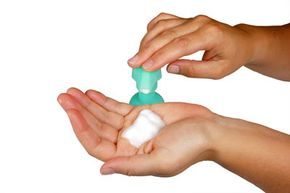
Look around your bathroom cabinet. It is likely overflowing with products promising to kill germs. Roughly 75% of liquid soaps in American grocery stores now slap “antibacterial” on the label. We have built an entire arsenal of cleansing tools around this concept. The assumption is simple: more bacteria-killing power equals cleaner hands.
But are we actually getting cleaner? Some experts say absolutely not.
To understand why, you have to look at the chemistry. Soap is not magic. It is a salt. You make it by combining an acid and a base. The acid is fat—fatty acids and triglycerides. The base is sodium hydroxide (NaOH). When you mix them, the fatty acids separate from the triglycerides and fuse with hydroxide ions. What you are left with is soap.
It has two main jobs. First, it decreases water’s surface tension. Second, it binds to dirt, oil, and bacteria.
Soap molecules are weird little things. One end is hydrophilic, meaning it loves water. The other is hydrophobic, meaning it hates water. The hydrophobic tail grabs onto oily grime, dirt, and bacteria on your skin. The hydrophilic head stays in the water. When you rinse, you are lifting that entire package away. The grime gets encapsulated in droplets and washed down the drain.
So ordinary soap removes bacteria. It does not kill them, but it removes them. That is usually enough.
Why antibacterial soap might be a waste of time
You might think antibacterial soap would be better. It contains extra ingredients designed to kill microbes. Usually, that ingredient is triclosan or, less commonly, triclocarbon.
There are a few reasons to hesitate.
First, those chemicals need time to work. You have to leave the soap on your skin for about two minutes. Most people do not wait two minutes. They lather up, scrub for a few seconds, and rinse. You are washing the active ingredients away before they can do anything. You are getting none of the benefit.
Second, there is a theory about resistance. Bacteria are stubborn. If we expose them to bactericidal agents constantly, they may develop resistance. We could be creating superbugs without meaning to.
Third, not all bacteria are the enemy. Our skin hosts a normal population of bacteria. They eat our sweat. They help defend us against truly harmful, invasive strains. Killing everything indiscriminately might mess with that balance.
Also, consider what you are trying to stop. Many common colds and stomach bugs are viral. Antibacterial soap does not kill viruses. It only targets bacteria.
What the experts recommend
The Centers for Disease Control and Prevention (CDC) is clear on this. They state that antibacterial soaps are not necessary for everyday use.
Washing your hands thoroughly with ordinary soap and warm water is one of the most effective ways to ward off infection. It removes the dirt where pathogens hide. It physically washes them away.
You do not need to scour your hands with chemicals that sit in waterways or build up in your body. You just need to scrub.
“Washing your hands thoroughly with ordinary soap and warm water is one of the most effective ways to ward off infection.”
The next time you reach for the bottle, check the label. If it says “antibacterial,” put it back. Grab the standard stuff. Scrub for twenty seconds. Rinse.
It is simple. It is effective. And it does not require a chemistry degree to understand.