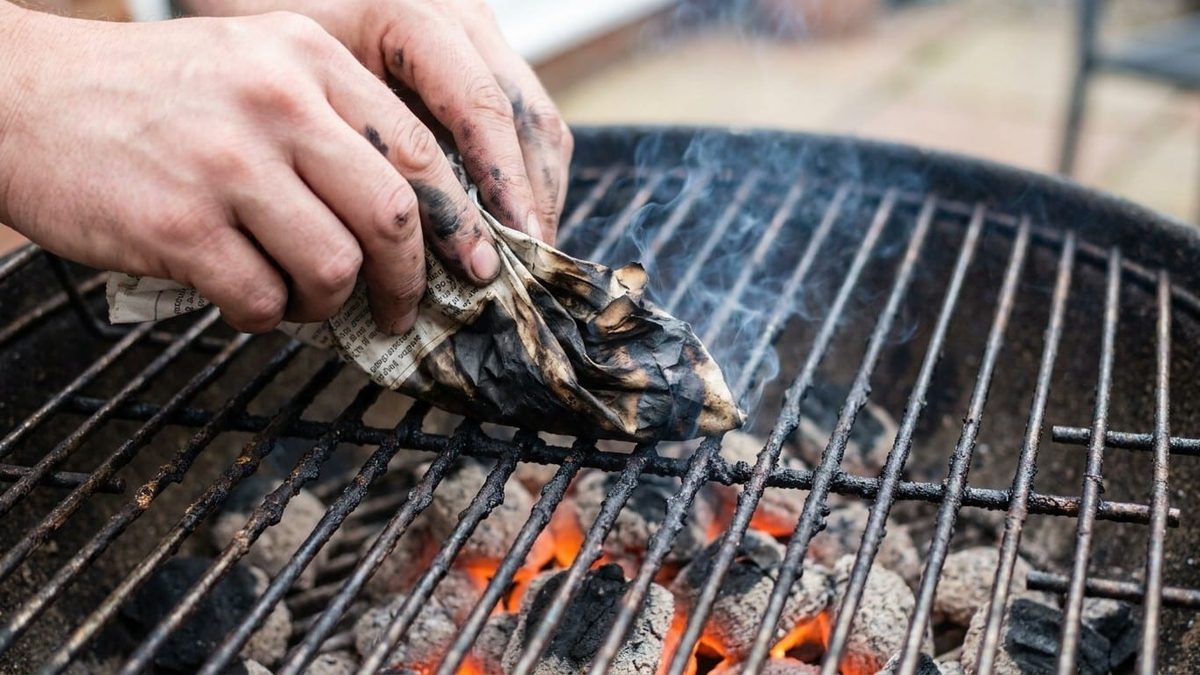
The neighbor’s fingers were black. Not from grease or soot. Ink. He had just scrubbed the hot grill grate with a crumpled sheet of Sunday paper to clean it before lighting the fire for next week. Looking at his stained hands, he said something that stuck with me.
“What you see on your hand is exactly what ends up on your meat.”
This isn’t a urban legend. It is basic chemistry.
We have been taught that newspaper is the ultimate free resource. It catches fire easily. It cleans metal. It is recycled. But when you use toxic ink migration during grilling, you are cooking with heavy metals.
Here is what you need to know before you light that next barbecue.
The Chemistry of Ink on Meat
Newspaper ink is not just black dye. It contains solvents, hydrocarbons, and heavy metals like lead and cadmium. These substances do not sit still when heated. They migrate.
A grill offers the perfect storm for this transfer. You have high heat. You have residual grease from previous cooks. Grease acts as a fixative, trapping chemicals and holding them against the metal surface.
Cadmium is a proven human carcinogen. Lead is worse because it is sneaky. It accumulates in your bones and organs. The effects show up years later. Neurological damage is a real risk, especially for children and pregnant women.
The INRS (French National Institute for Research and Safety) confirms this. For professional printers, these chemicals are cumulative toxins. The same logic applies to your home grill. When newspaper burns, it releases compounds into the smoke. That smoke rises. It hits the greasy grate. It settles on your next steak.
The mechanism is simple. Burning paper releases chemicals. Smoke carries them up. Grease holds them. Your food eats them.
The Myth of the “Clean” Grate
Using paper to start a fire or clean a hot grill is a widespread habit. The CLCV (consumer defense association) warns against it. Most people ignore the warning.
Paper seems innocent. It feels eco-friendly. But colored ink is the real issue.
Black text ink is bad. But color? The sports section? The glossy ads? Those contain quad-rich pigments. They are loaded with chemicals. You grab those colorful pages first to crumple into a ball. You are feeding the fire with the most toxic part of the paper.
Then comes the cleaning trick. Rubbing a hot grate with newspaper. It works visually. It lifts the grime. But what does it deposit? More ink. More heavy metals. The bars go onto your next cut of meat.
Safer Ways to Start the Fire
Stop using paper. Start using wood.
Traditional fire starters made of petroleum or kerosene smell bad. They taste worse. They make your meat taste like a gas station. They release toxic vapors. The only advantage newspaper has over them is that it is odorless while burning. That is a thin margin.
Natural alternatives exist. And they work better.
Wood wool is the top choice. These small logs are made of natural wood fibers. They are soaked in beeswax or food-grade paraffin. They cost less than branded chemical starters. They are cleaner.
- No heavy metals.
- No HAP (polycyclic aromatic hydrocarbons).
- Clean burn from start to finish.
- No toxic residue on the grill.
You need a metal brush and an oiled paper towel for cleaning. That is it. No newspaper. No chemicals. Just heat and wood.
The smoke from wood wool is clean. It does not carry toxins. It respects the air you breathe and the food you eat. Your grill stays safer. Your meat stays cleaner.
The neighbor was right to point at his black hands. But he didn’t tell you how to fix it. Now you know.
Light the fire with wood. Eat with peace of mind.
The 10 cm rule that actually changes how you cook
Safety isn’t just about what you use to start the fire. It’s about what happens once the flames are going. Barbecue cooking releases specific molecules known to be carcinogenic. Specifically heterocyclic amines (HCAs) and polycyclic aromatic hydrocarbons (PAHs). These compounds form regardless of your fire starter choice. They appear when meat hits temperatures that are too high or touches open flames directly.
Science offers a clear workaround.
You need to keep cooking temperatures around 220°C. This is easier to manage if you follow a simple physical rule. Place your grill grate at least 10 cm above the coals. This distance matters for horizontal barbecue setups. It creates a buffer zone between intense direct heat and your food.
Data shows the risk of overexposure is limited if you stick to these guidelines.
There is a financial angle here too. Wood wool fire starters are cheap. They cost about 13 cents each. Newspaper is free. But cheap up front doesn’t mean cheap in the long run. Accumulated smoke deposits build up on your grill grates over a summer. Those residues contain the very chemicals you are trying to avoid.
The math changes when you account for health costs or grill replacement. The 10 cm rule isn’t just a safety tip. It is a practical barrier against both carcinogens and residue buildup.
Respect the distance. Watch the heat. Your grill will thank you. And so will your body.