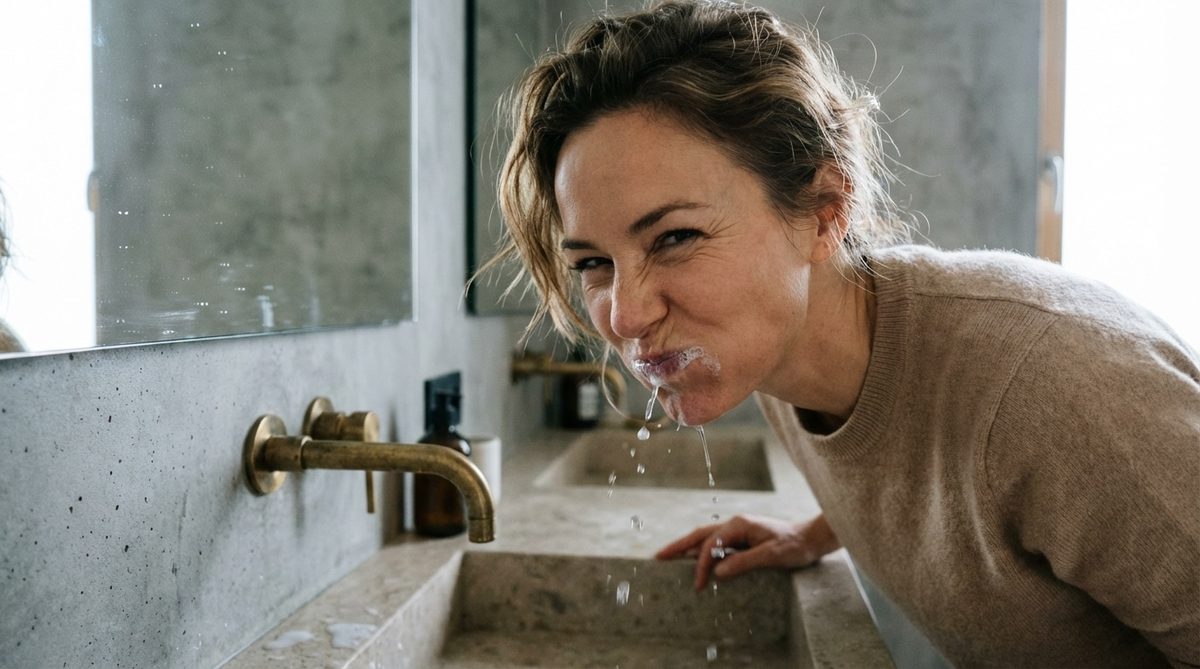
The ritual is automatic. You spit out the foam, grab a glass of water, and swish. It feels clean. It feels finished. But that single sip is wiping away hours of protective work.
For years, we’ve been told that a thorough rinse is the only way to truly cleanse the mouth. We chase that squeaky-clean feeling like it’s a virtue. But here is the uncomfortable truth: you are washing away the very shield designed to protect your enamel while you sleep.
The Pavlovian Habit That Sabotages Dental Health
The Deceptive Freshness of Rinsing
Since childhood, we are conditioned to believe that brushing without rinsing is incomplete. We want no residue. We want total purity. So we splash water in our mouths, swirling it around to flush out every speck of toothpaste foam.
It feels like a fresh start. But it is a false sense of security.
Think about it. You apply a specialized treatment to your teeth. Then, within minutes, you dilute it. You are essentially applying a moisturizer to your skin and immediately washing it off with a hose. The water doesn’t just clean; it erases. You are sending the protective minerals down the drain.
The Dentist’s Revelation
This realization usually hits during a routine checkup. The hygienist points out early signs of sensitivity or erosion. Your enamel is showing its age. It’s porous. It’s tired.
The connection becomes clear in that moment. You are meticulously applying a sophisticated product only to consciously destroy it three minutes later. It makes no sense. Yet, we do it every night.
Changing this habit isn’t just about better teeth. It’s about respecting the biology of your mouth and conserving water. It’s a small shift with a massive impact.
How Fluoride Works When Left Alone
Microscopic Armor Needs Time
Fluoride isn’t magic. It’s chemistry. And chemistry requires time.
When you brush, fluoride ions bond with the hydroxyapatite in your enamel. They form a new, harder layer called fluorapatite. This layer is significantly more resistant to acid attacks from food and bacteria.
But this process isn’t instant. It doesn’t happen in seconds. If you rinse immediately, you interrupt the bonding process. You wash away the ions before they can integrate into the tooth structure. Without that time, the fluoride does little more than taste minty.
Nighttime Remineralization
Night is when the real work happens. During sleep, saliva production drops significantly. Saliva is our natural defense, neutralizing acids and washing away debris. With less saliva, your teeth are vulnerable.
This is where leaving toothpaste residue matters. By not rinsing, you leave a concentrated layer of fluoride on your teeth. This environment promotes remineralization overnight. It repairs microscopic cracks and weak spots that accumulate throughout the day.
Think of it as a nightly repair crew working while you’re unconscious. If you rinse, you fire the crew before they finish the job.
The Great Washout: How Water Chase Away Protection
The Dilution Effect
Imagine pouring concentrated cleaner onto a floor and then immediately flooding it with water. The cleaning power vanishes.
Toothpaste is not soap. It is a delivery system for active ingredients. When you rinse with a full glass of water, you create a mechanical tsunami. You are physically dislodging the protective film that coats your teeth.
The foam isn’t just air and flavor. It carries the active agents deep into the interdental spaces. Rinsing strips that away. It dilutes the concentration below the effective threshold. All that meticulous brushing effort is undone by a few seconds of water.
Biological Consequences of Rinsing
What happens when that protective film is gone?
Bacteria remain. They aren’t all dead. They linger in the crevices. Without the fluoride barrier to inhibit them, these bacteria feast on residual sugars. They produce acid. That acid attacks the exposed enamel.
Over time, this leads to erosion. It leads to the dreaded sensitivity to hot and cold. It weakens the tooth structure from the inside out. By rinsing, you are essentially giving bacteria a clear path to cause damage.
A Spring Cleaning for Your Smile
Spring is often associated with renewal. We declutter our homes. We detox our diets. It’s the perfect time to rethink our oral hygiene routine.
You don’t need expensive gadgets. You don’t need a new brand of toothpaste. You just need to stop rinsing.
How to Make the Switch
- Brush thoroughly for two minutes.
- Spit out the excess foam.
- Do not rinse. Let the residue stay on your teeth.
- Wait at least 30 minutes before eating or drinking anything else.
It feels strange at first. Your mouth might feel coated. That’s not dirt. That’s protection. It’s the fluoride doing its job.
Why This Matters More Now
As we age, enamel wear becomes more pronounced. Sensitivity increases. The cost of dental work rises. A simple change in habit can prevent years of discomfort and expense.
It’s not about being perfect. It’s about being effective.
You are the guardian of your own smile. The tools are in your cabinet. The choice is yours.
Will you keep washing away your defenses? Or will you let them do their work?
The answer might be simpler than you think. Just leave the water in the glass.
Taming the Initial Discomfort
Changing a habit this deep-rooted feels almost like a psychological hurdle. In those first few nights, skipping the water rinse leaves a weird sensation. Your mouth feels coated. There’s this persistent, pasty film stuck to your palate and tongue.
You’ll feel an urge to swish. Just ignore it.
This discomfort is temporary. It’s purely perceptual. Your tolerance adapts quickly. That aromatic residue lingering in your mouth isn’t a flaw—it’s a feature. It becomes the new standard for hygiene. It’s the reassurance that protection is active while you sleep.
The Technique for Spitting Without Diluting
The method is straightforward. It’s minimalist. It aligns with that zero-waste philosophy many of us are trying to adopt, just applied to our morning routine.
Once you’ve finished brushing thoroughly, spit out the excess foam. Do this two or three times to clear your mouth. No heavy lifting required.
Wipe your lips with a clean towel. If you really must, put a tiny drop of water on the corners of your mouth. But don’t let liquid cross the threshold of your teeth. Let that invisible film do its work.
Why Commercial Mouthwashes Sabotage Your Brush
Here’s the trap many of us walk into: using commercial mouthwash right after brushing.
Marketing sells this as the final step for icy breath. Biology disagrees. Most liquid mouthwashes have a much lower concentration of protective agents than toothpaste.
By flooding your mouth with that colored liquid, you aren’t adding protection. You’re swapping a strong shield for a weak one. The liquid washes away the concentrated protective layer toothpaste deposited. It leaves behind a fleeting film. You’ve ruined the initial operation.
When to Actually Use Mouthwash
Does this mean you should toss your bottles? No. But you need to rethink the timing.
These flavored liquids shine at specific times of day. Use them when brushing isn’t an option.
Afternoon pick-me-up? Use it. Hit an acidic snack mid-day? Swish then. Here, the mouthwash serves as a portable ally. It provides a stopgap dose of protection. It prevents acid attacks from taking hold until you can get home and brush properly.
Clinical Results: Sensitivity Disappears
Adopting the waterless approach changes your smile over months.
Your enamel density improves. If you used to wince at hot tea or summer ice cream, that pain drops significantly. Some people see it vanish entirely.
Why? Because the active ingredients work for hours without being diluted. The molecular barrier seals the breaches. It smooths the surface. It limits bacterial proliferation with terrifying efficiency.
Your Daily Checklist for Maximum Protection
To make this stick, follow these steps starting tonight:
- Brush every surface gently for at least two full minutes.
- Spit out all the foam vigorously.
- Wipe the outside edges of your lips lightly.
- Absolutely no liquids for the hour after brushing.
By giving up that post-brush glass of water, you’re finally unlocking the full power of fluoride. Letting the toothpaste sit on your enamel turns a mundane routine into a genuine shield.
It offers restorative nights for your teeth. It makes dental visits less stressful.
Sometimes doing less yields better results. It’s a simple idea. But it seeds big wins in prevention.
The film stays. The protection holds. You just have to trust the process.