
Your fridge doesn’t sleep. It hums in the background, holding groceries at bay, keeping your milk safe while the rest of your kitchen collects dust. Most of us treat it like background noise until the dairy sours and panic sets in. But here’s the thing: your daily habits are silently chewing on the appliance’s lifespan.
Ian Palmer-Smith, an expert at Domestic & General, says a fridge should last 10 to 15 years. Ignore the rules? That number plummets to eight or nine. We aren’t talking about rocket science. We are talking about basic maintenance. Three repair pros spilled their secrets on the most common, deadly sins against refrigerators. And the fixes are cheaper than a new unit.
Mistake 1: Ignoring the condenser coil
You’ve likely never looked at the back or bottom of your fridge. That’s the problem.
The condenser coil is the metal grid where refrigerant gas gets condensed into liquid. It sits out of sight, usually tucked behind, beneath, or above the unit. And because it’s hidden, it becomes a magnet for dust, grease, and pet hair.
“It stops the coil from dissipating heat,” Palmer-Smith says. “So the motor ends up overheating.”
Tony Andrade, a service manager at Abt Electronics, puts it bluntly: a dirty coil forces the compressor to overwork. Once that compressor hits a certain temperature, it shuts down. You get warm food. You get an inefficient unit.
The fix: Clean that coil every six months if you have pets. Once a year if you don’t. A $5 slim condenser brush from Home Depot or Walmart does the trick. Slide it under the fridge, pull out the gunk, then vacuum the mess. Palmer-Smith also suggests pulling the unit out completely every winter to give it room to breathe. If you park the fridge flush against a wall, you trap heat. Heat kills motors.
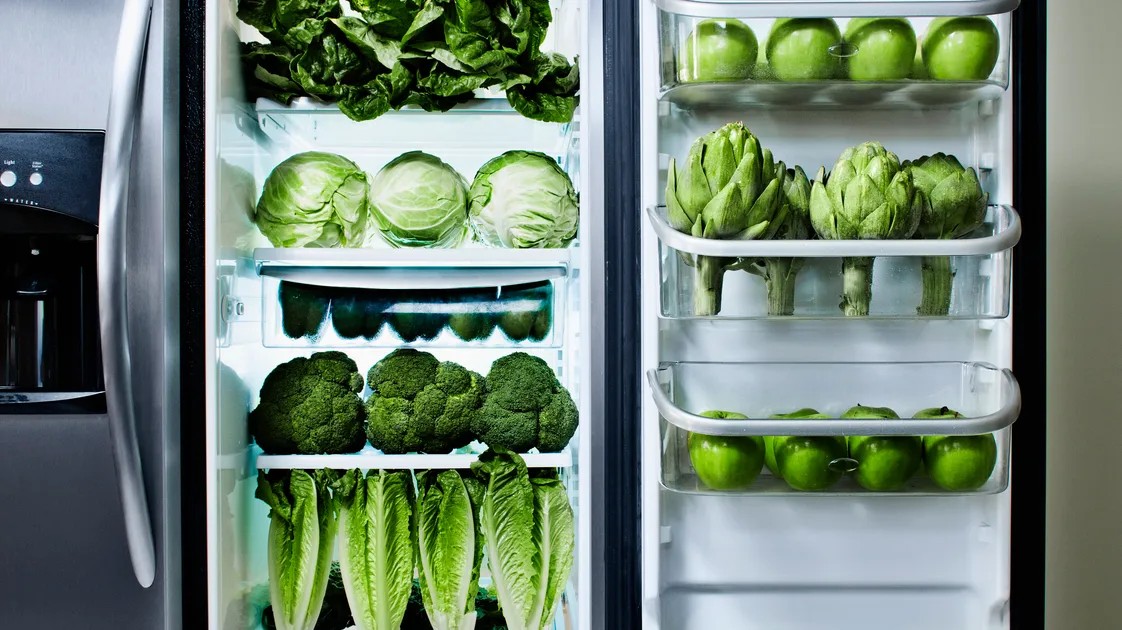
Mistake 2: Overpacking like it’s Black Friday
Cramming groceries in before a holiday dinner is fine for a night. Making it your lifestyle? That’s a death sentence.
Overpacking doesn’t just add weight. It suffocates airflow. Cold air needs to circulate. If you create a wall of leftovers, that air has nowhere to go.
“Overpacking… leads to uneven temperatures and can cause the compassor to work much harder,” Palmer-Smith warns.
Andrade adds that blocking the vents—especially the ones near the top—prevents proper cooling. The result is uneven temps and a compressor that never gets a break.
The fix: The eyeball test. Can’t see any empty space? You’ve gone too far. Treat a packed fridge like a temporary state, not a permanent feature. Keep the vents clear. If you’re constantly seeing the inside of a wall of food, you’re asking for trouble.
Mistake 3: The constant peek-and-check
Every time you open the door, warm, humid air rushes in. Your home is at 70 degrees. Your fridge is at 37 degrees. That temperature shock is no joke.
Dennis Godynuk of Comfort Appliance Repair TN sees the fallout. “Repeated openings undo the cooling cycle,” he says. It can take four to six hours for a fridge to stabilize after a big opening event. If you keep checking every two minutes, you reset the clock. The interior panels get soaked. Moisture drips down into electrical components.
Is opening the door once for dinner a crime? No. Godynuk notes that brief access is fine. Seven or eight times in an hour? That’s when you get water damage and efficiency losses.
The fix: Plan your trips. Get what you need and close it. After a repair or a massive restock, let the unit sit undisturbed for a few hours. Give it time to catch its breath.
Mistake 4: Shoving hot food directly inside
Steam is just moisture wearing a disguise. And moisture is the enemy of electronics.
If you put boiling noodles straight into the fridge, the steam rises and settles on the coldest parts of the machine. Godynuk says this moisture often traps inside fan motors or cooling components. When those parts run near freezing, that trapped water turns to ice. The fan jams. The noise gets loud. The cooling stops.
Palmer-Smith notes the strain on the compressor too. Putting hot food in puts immediate pressure on the hardest-working part of the fridge. Do it daily, and you shorten its life significantly.
The fix: Let it cool to room temperature. An occasional warm container isn’t fatal, but as a routine? It adds up to expensive repairs.
Mistake 5: Guessing the right temperature
People love extremes. Freezing cold or barely chilled. Both are mistakes.
“A lot of people set their fridges either to warm or to cold,” Palmer-Smith says. Either way, the unit works overtime. That extra labor burns out components faster.
Godynuk recommends keeping the temp between 36 and 39°F. Why so specific? Because if you set it to 42°F (which some regulatory standards allow), the temp can float up to 44°F before the cooler kicks back in. “That’s too close for comfort,” Godynuk says. Go below 36°F, and you’re flirting with freezing your own food.
The fix: Set it in the high 30s. Simple. Check your manual if you’re in the U.K., where 3 to 5°C is the standard.
Mistake 6: Neglecting the rubber seal
That rubber gasket around the door is doing heavy lifting. It keeps the cold in and the humidity out. If it’s cracked, dirty, or loose, the seal fails.
Palmer-Smith says harsh cleaners often degrade that rubber faster than time does. A bad seal lets warm air slip in. Andrade explains the chain reaction: cold air escapes, the fridge runs longer to compensate, and the compressor eventually wears out from overuse.
The fix: Wipe the seal with mild soap every six months. Skip the bleach and harsh chemicals. Check for cracks. If it doesn’t snap shut snugly, replace it.
None of these fixes require a degree in engineering. They require ten minutes of your time and a little attention to detail. Your fridge was built to run for decades. Don’t sabotage it with shortcuts. The milk won’t last forever, but with a little care, neither will this appliance.