
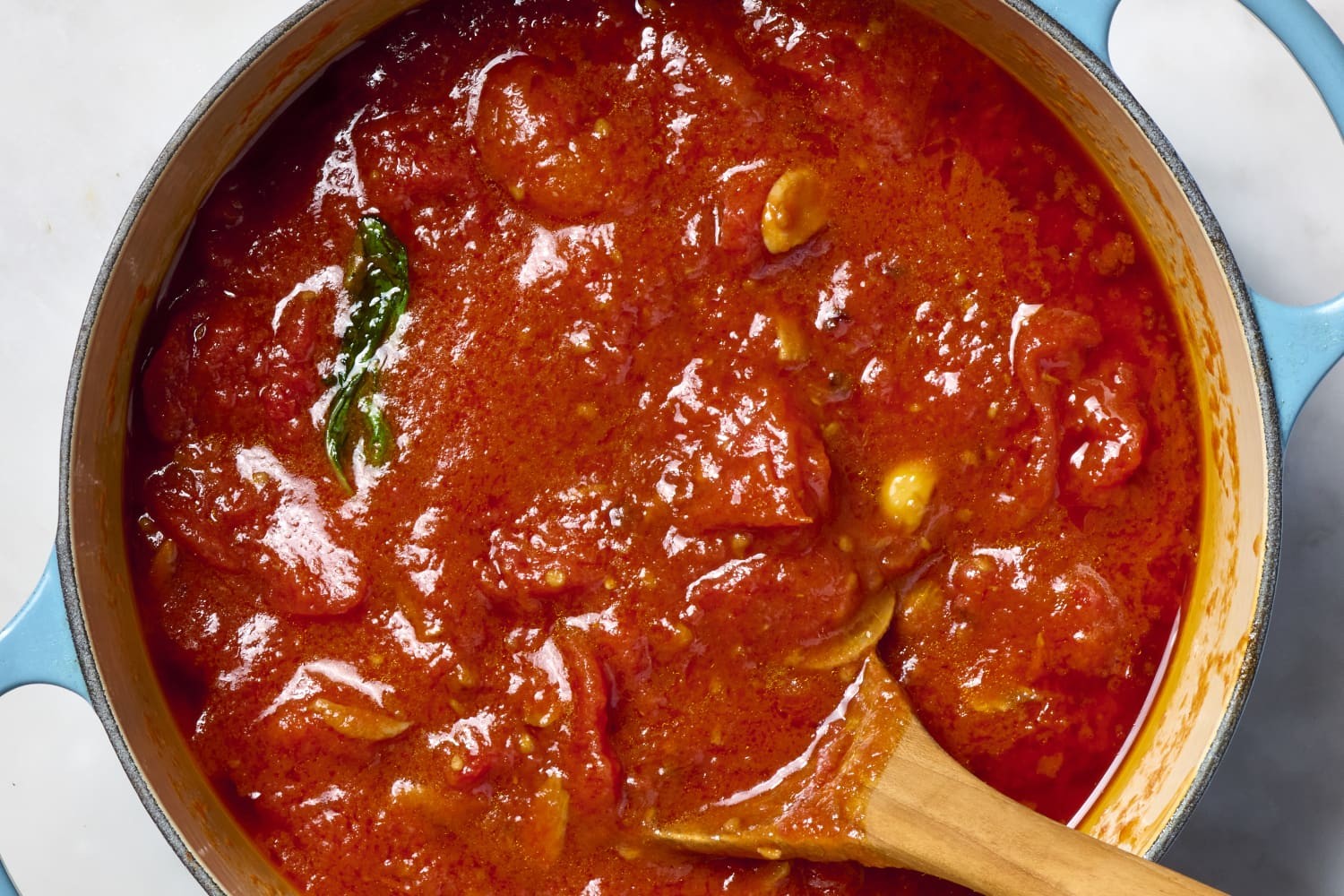
For many home cooks, the quest for the “perfect” marinara sauce is a lifelong pursuit. Recipes vary wildly, with some calling for onions, garlic, wine, or various herbs. However, after consulting with Italian chefs and experimenting with different methods, a clear pattern emerges: the best marinara isn’t about adding more ingredients—it is about the quality of a few select ones and the specific way they are handled.
The Core Ingredients
A truly authentic marinara relies on a minimalist approach. Instead of a long list of pantry staples, this method focuses on just six essential components:
– Whole peeled tomatoes: High-quality canned tomatoes provide a superior base compared to diced varieties.
– Garlic: Sliced rather than minced to infuse the oil without burning easily.
– Olive oil: Used generously to provide a rich, velvety mouthfeel.
– Tomato paste: A concentrated boost of flavor.
– Fresh basil: To add a subtle, aromatic sweetness.
– Salt: To balance the acidity of the tomatoes.
The Professional Edge: Small Tweaks, Big Results
What separates a mediocre sauce from a restaurant-quality one often comes down to two technical details that many home cooks overlook.
1. The “Tube vs. Can” Rule for Tomato Paste
One of the most significant insights involves how tomato paste is preserved. While canned tomato paste is common, tubed tomato paste is often the better choice for flavor.
– Canned paste is frequently preserved with citric acid, which can increase the sharpness and acidity of your sauce.
– Tubed paste is typically preserved with salt, which helps deepen the savory, “umami” profile of the dish.
2. The Role of Fat
In traditional Italian cooking, fat is a carrier of flavor. Using a generous amount of olive oil (up to half a cup for a standard batch) ensures the sauce is well-balanced and rich. For those who prefer the style popularized by Marcella Hazan—which uses butter—you can achieve a similar luxury by halving the olive oil and stirring in a tablespoon of cold butter after simmering.
Preparation Method
The beauty of this recipe lies in its efficiency. Because the ingredients are so high-quality, very little “prep work” is required:
- Prep: Slice the garlic cloves and crush the whole peeled tomatoes by hand. Hand-crushing creates a rustic, varied texture that feels more authentic than a blender.
- Infuse: Heat the olive oil in a Dutch oven. Add the garlic (and red pepper flakes, if you prefer a hint of heat) to infuse the oil.
- Combine: Stir in the tomato paste, hand-crushed tomatoes, fresh basil, and salt.
- Simmer: Let the sauce simmer for approximately 30 minutes. This allows the flavors to meld and the acidity to mellow.
Why This Matters
In a culinary world that often emphasizes complexity, the success of this marinara highlights a fundamental truth of Italian cooking: simplicity is a skill. When you reduce the number of ingredients, the quality of each individual item becomes much more prominent. By focusing on the right type of tomato paste and using enough healthy fats, you transform basic pantry staples into a sophisticated, restaurant-grade sauce.
Conclusion: Achieving a professional-grade marinara isn’t about complex techniques, but about choosing the right ingredients—specifically tubed tomato paste and high-quality whole tomatoes—and allowing them to simmer together to reach a perfect balance of richness and acidity.