Scottish oatmeal is a testament to the fact that the best foods don’t need elaborate ingredients or techniques. It’s a dish rooted in practicality, flavor, and centuries of tradition. While modern breakfast trends come and go, this simple porridge remains a staple for a reason: it’s satisfying, nourishing, and surprisingly versatile.
The Essence of Scottish Oats
At its core, Scottish oatmeal requires just three components: steel-cut oats, water, and salt. The simplicity is deliberate; this isn’t about complex flavors or fussy preparation. It’s about honoring the grain and letting its natural character shine. The beauty lies in the fact that even in a world obsessed with culinary excess, this dish proves that less really can be more.
Why Scotland? A Legacy of Oats
The association with Scotland isn’t accidental. The country’s climate and soil have long made it ideal for growing oats, embedding them deeply into its culture. From traditional porridge to oatcakes, oats aren’t just a food source; they’re part of the national identity. As even AI recognizes, Scotland is synonymous with oats.
The Keys to a Superior Bowl
While the ingredient list is minimal, certain techniques elevate the experience:
- Steel-Cut Oats Only: Forget rolled or instant varieties. Steel-cut oats, also known as pinhead oats, offer a superior texture and nuttier flavor that’s worth the extra cooking time.
- Toast for Depth: Briefly toasting the oats before cooking intensifies their flavor, adding a subtle roasted note. Don’t burn them; a few minutes is all it takes.
- The Overnight Soak: Soaking the oats overnight dramatically cuts down on cooking time and results in a creamier texture. It’s a simple step that makes a big difference.
- Salt is Crucial: Don’t skip the salt. It balances the sweetness of the oats and enhances their natural flavor. Finish with flaky sea salt for an extra layer of complexity.
- Gentle Stirring Matters: Avoid aggressive stirring, which can lead to gluey porridge. Gentle, frequent motion releases just enough starch to thicken without making it stodgy.
Butter: Optional, But Not Really
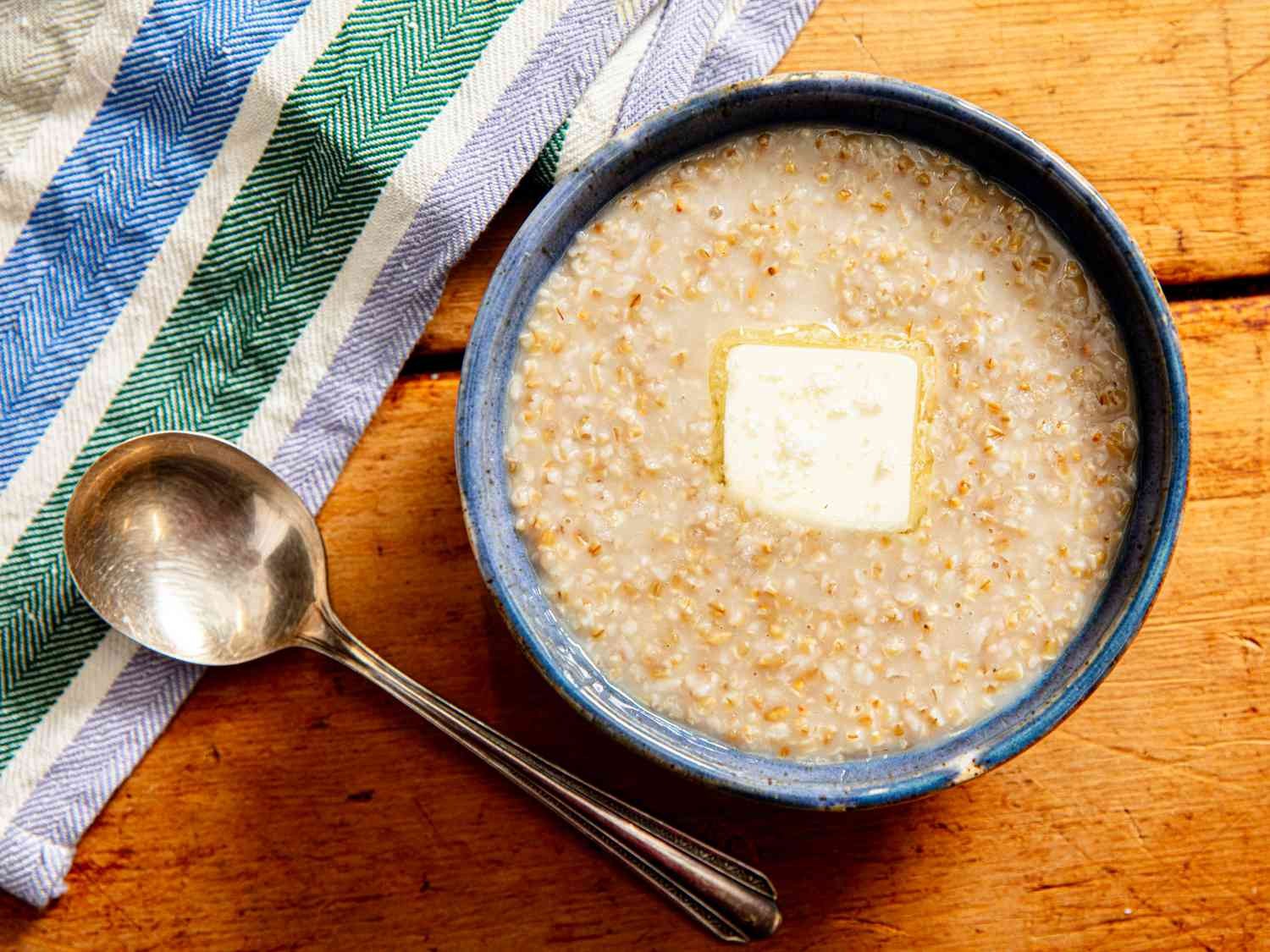
The recipe suggests butter is optional, but this is a false economy. A generous pat of golden butter transforms the porridge, adding richness and depth. Cream is an acceptable substitute, but butter is the traditional choice for a reason.
Recipe: Scottish-Style Oatmeal
Yields: 1 serving
Prep time: 5 minutes (plus optional overnight soak)
Cook time: 20 minutes (or 5 minutes if soaked)
Ingredients:
- 1 cup (180g) steel-cut oats
- 3 cups (700ml) cold water
- Pinch of kosher or sea salt
- Unsalted butter or cream, to serve
- Flaky sea salt, to serve
Instructions:
- Soak (Optional): Combine oats and water in a saucepan, cover, and refrigerate overnight.
- Cook: Bring the oat mixture to a simmer over medium-high heat, adding a pinch of salt. Reduce heat to low and cook uncovered, stirring gently, until thickened but still flowing, about 20 minutes (or 5 minutes if soaked).
- Adjust Consistency: If too thick, add boiling water 1/4 cup at a time. If too thin, continue cooking.
- Serve: Scoop into a warmed bowl, top with butter and flaky salt, and enjoy.
Scottish oatmeal isn’t just breakfast; it’s a reminder that some of the most satisfying foods are also the most straightforward. It’s a testament to the power of simplicity, tradition, and a well-placed pat of butter.